
Project Shylock – Part 2
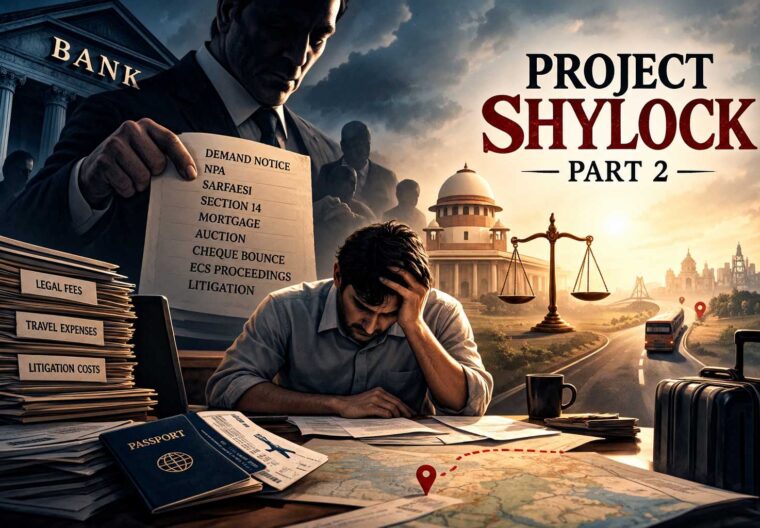
How many times does a borrower actually receive a meaningful explanation from a bank when something goes wrong? A loan is taken with an honest intention to repay, but one default, one financial difficulty or one dispute in payment can suddenly change the entire relationship. The officer who once assured you that everything would be resolved may be transferred; a new officer arrives with a new target and a different strategy. Then comes the demand notice, the NPA classification, the pressure for payment, and sometimes cheque bounce or ECS proceedings. The assurance disappears, but the recovery machinery continues.
What makes the situation even more painful is the manner in which recovery proceedings are sometimes pursued. A loan is taken in one place, the borrower resides there, the transaction takes place there—but the proceeding is initiated in a forum hundreds or even thousands of kilometres away. The borrower is then compelled to travel, engage lawyers, bear repeated litigation expenses and defend himself far from his own jurisdiction. What may appear institutionally as a question of jurisdiction can, for an individual borrower, become a strategy of pressure. When demand notices, NPA proceedings, SARFAESI action, mortgage enforcement, symbolic or physical possession under Section 14, auction proceedings and other recovery mechanisms are added to that burden, the borrower can feel as though the entire machinery has been set in motion against him—not to ensure a fair adjudication, but simply to make resistance financially and practically impossible.
Yet, the Supreme Court has repeatedly reminded financial institutions that the right to recover does not mean a licence to act beyond law. In ICICI Bank Ltd. v. Prakash Kaur, (2007) 2 SCC 711, the Court deprecated coercive recovery methods and emphasised that banks must resort to procedures recognised by law. In Mardia Chemicals Ltd. v. Union of India, (2004) 4 SCC 311, the Court recognised the statutory recovery mechanism while also examining safeguards against arbitrary exercise of such powers. The question, therefore, is not whether a bank has the right to recover—it does. The question is how far that right can be exercised before recovery becomes high-handedness and legal process becomes pressure. And when that pressure begins to feel overwhelming, one thing must not be forgotten: a demand notice is not the end, an NPA is not the end, and even the initiation of litigation is not the end. The right legal advice, at the right time, can change the way the entire case is understood and defended. Sometimes, for a borrower who feels that every door has closed, proper legal guidance is the first door that opens.
#ProjectShylock #ProjectShylockPart2 #BankRecovery #BorrowerRights #BorrowerLegalRights #LoanDefault #NPA #SARFAESI #SARFAESIAct #Section14 #MortgageEnforcement #DebtRecovery #BankLoanRecovery #RecoveryProceedings #DemandNotice #ChequeBounce #ECSProceedings #BankingLaw #BankingLitigation #FinancialDisputes #LoanDispute #LegalRemedies #LegalNotice #BorrowerProtection #DRT #FinancialLitigation #BankingLawIndia #LegalAdvice #KolkataLawyer #GSLegalAndAssociates #GSLegal