
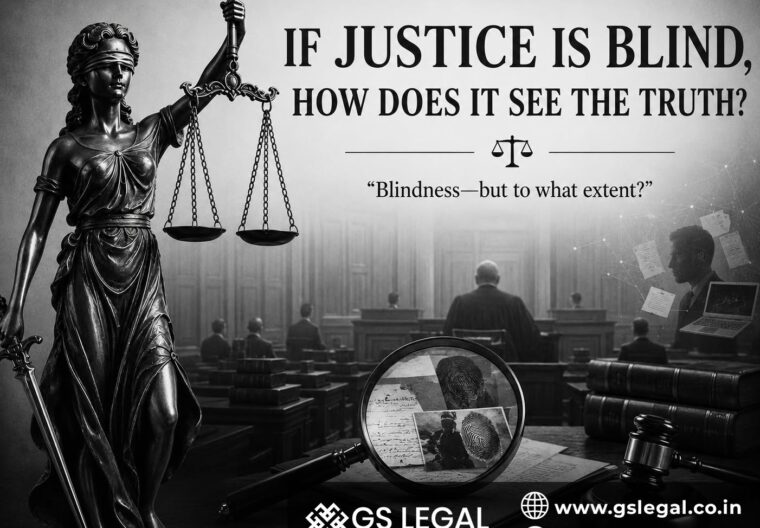
If Justice Is Blind, How Does It See the Truth?
“Blindness—but to what extent?”
Justice has long been imagined as a blindfolded woman, holding scales and a sword. The symbol came through Roman tradition and found philosophical strength in Europe, especially in the ideas of Montesquieu and Jean-Jacques Rousseau—where fairness meant detachment from power, privilege, and status. The blindfold was never weakness; it was discipline. It meant the law must not see who stands before it, only what stands before it.
But the modern courtroom is a peculiar place. Truth rarely arrives clean. It hides in forged papers, fractured testimony, digital footprints, and strategic silence. A judge today cannot afford blindness in that sense. The judicial mind must observe hesitation, contradiction, conduct, and motive—because sometimes truth is not spoken, only revealed.
Perhaps justice was never meant to be blind to truth.
Only blind to influence.
And in that distinction lies the dignity of law.
#GSLegal #Justice #LegalPhilosophy #JudicialMind #Montesquieu #Rousseau #LegalAwareness