
Fiction Is Imagined. The Questions Are Real
A GS Legal perspective on “Anatomy of a Fall” the space between what happened and what can be proved.
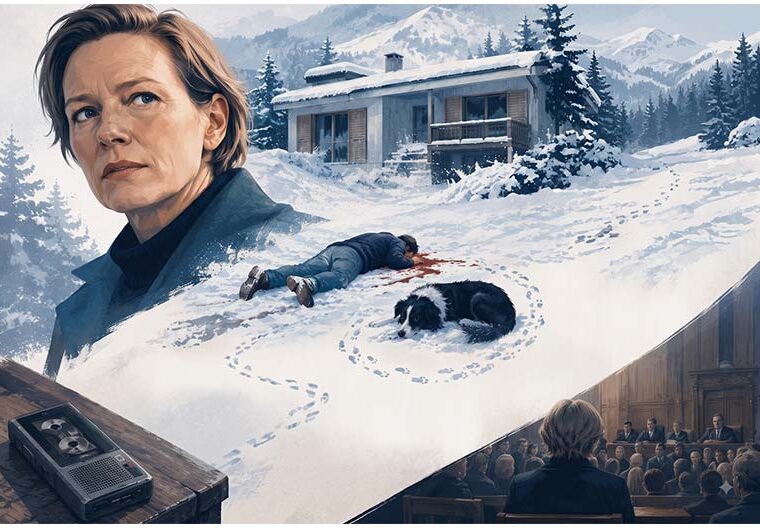
Sometimes a movie is more than a movie. Sometimes, when we reach the core of what a film is trying to say, it changes the way we look at people, evidence and even our own understanding of truth. Anatomy of a Fall begins almost quietly, with an ordinary family carrying the weight of old emotional wounds. A husband and wife, both writers, live with their young son, who lost his vision in an earlier accident. Their marriage has its frustrations, its silences and its unresolved questions. Then the husband dies. What first appears to be a private family tragedy soon becomes a criminal investigation. The wife becomes the accused, and the central question is no longer simply what had been happening inside the family, but whether the death was an accident, a suicide or the result of a criminal act. This is where the film becomes fascinating for a lawyer, because the story slowly moves away from what we think may have happened and towards the much harder question of what can actually be proved.
The prosecution builds a case of homicide, while the defence places other possibilities before the court. But the real question is not simply which version sounds more convincing. It is whether the evidence is strong enough to establish criminal responsibility beyond reasonable doubt. That is what makes the film so interesting for anyone who has seen criminal practice closely. What follows is not a straightforward search for what happened. It is a careful examination of what can actually be proved. The film is multilingual, but its real language is evidence. A fact remains a fact, yet its meaning can change when it is placed in a different context or examined from another angle. The defence keeps testing the prosecution’s story, and slowly we see that criminal practice is not only about knowing the law. It is also about understanding people—their behaviour, their memories, their contradictions and the fragile distance between suspicion and proof.
One of the early moments sets the tone for what follows. The investigators explain that, given the height of the window, an accidental fall would be difficult to establish. That leaves two possibilities:
he jumped, or he was pushed, perhaps after a blow.
The wife is therefore placed in the middle of an investigation simply because she was the only person there—and because she was his wife. A private tragedy has now become a question of criminal responsibility.
The film also gives us a good sense of how forensic evidence works in a criminal case. The body, the injuries, the position of the fall, blood patterns, toxicology and other material findings do not simply announce who is guilty. They help investigators and the court reconstruct what may have happened and test whether a particular version of events is physically possible. In real criminal investigations, forensic evidence is part of the process of establishing the manner and circumstances of a death; it can provide important clues, but those clues still have to be interpreted with the other evidence. A forensic report is not the verdict. It is one piece of the story. Blood patterns, for example, can help examine direction, movement and the possible source of an impact, but such findings are not automatically conclusive on their own. They have to be considered with the scene, medical findings, witness accounts and the rest of the evidence.
Later, the prosecution takes the argument in a more unusual direction. The accused is a writer, and a dark passage written by one of her fictional characters is placed before the court. The passage describes a once-loved body becoming a burden that must disappear. The defence answers that a writer creates characters; their thoughts cannot simply become the writer’s own. Otherwise, a Stephen King novel could be treated as evidence that the author is a serial killer. The prosecution’s reply is equally sharp: Stephen King’s wife did not die in suspicious circumstances. It is a brief exchange, but it shows how quickly a courtroom can move from literature to evidence, and from imagination to suspicion.
That is what makes the film so fascinating. The court is not deciding what kind of person the accused is. It has to decide whether the circumstances and the evidence are enough to establish criminal responsibility. The lawyer’s task is therefore not just to collect facts, but to question the meaning given to them.
The defence keeps pulling that narrative apart. The facts do not change, but their meaning can change with the way they are tested and placed before the court.
That is what criminal practice teaches us. It is not only about knowing the law. It is about understanding people—their behaviour, credibility, memory, contradictions and the narrow distance between suspicion and proof.
The blind child makes the case even more difficult. He is not simply a witness; he is a child caught between memory, affection and responsibility. His evidence carries a human weight that no law book can really explain.
Then comes the most unsettling part. Even after the accused is acquitted, there is no great celebration. The legal battle may have been won and the allegation may have failed, but something has already been lost that no judgment can restore.
Sometimes victory means nothing.
That is what makes the film stay with you. A court can decide guilt or innocence on the evidence before it. But it cannot rebuild a broken family, bring back the dead, or create certainty where human memory itself remains uncertain.
That is why Anatomy of a Fall deserves to be watched—not simply as a courtroom drama, but as a lesson in criminal advocacy.
Every law student should watch it. Every criminal lawyer should watch it twice.
GS Legal recommends it—not because it gives easy answers, but because it shows how difficult the questions really are.
#AnatomyOfAFall #CriminalAdvocacy #CriminalLaw #LegalAwareness #LegalInsights #CourtroomDrama #Evidence #BeyondReasonableDoubt #CriminalJustice #LawAndCinema #LegalEducation #LawStudents #CriminalLawyers #Advocacy #Litigation #Courtroom #Justice #RuleOfLaw #LegalProfession #LawAndSociety #GSLegal #LegalPerspective #LawyersOfIndia #KolkataLawyers #FilmAndLaw #Jurisprudence #EvidenceLaw #JusticeMatters